What to Do During Study Breaks: A Practical Guide
Not sure what to do during study breaks? Find practical ideas for short and longer breaks, plus a simple way to get back to work without losing your place.
Your study timer rings just as you finish a question. You open your phone while deciding what to do next, answer a message, and follow a link someone sent. By the time you look up, the next study session should already have started.
That is a useful moment to rethink the break itself. If you are wondering what to do during study breaks, start with something simple: step away from your materials, get comfortable, and choose an activity you can finish within the time available. A short walk, a drink of water, or a few quiet minutes away from a screen can fit between sessions without creating another task to manage.
The details depend on where you are studying and what you need. A student in a crowded library has different options from someone working at a kitchen table. You do not need the same break every time.
Before you leave your desk, mark where to restart
A break can be perfectly pleasant and still leave you reluctant to return. Sometimes the awkward part is reopening an unfinished task and figuring out what you were doing.
Before standing up, leave a brief note about the next action. For a problem set, that might be “Question 7: draw the diagram first.” For an essay, try “Add the example about public transport to paragraph three.” If you stopped because something was confusing, write down the exact question you need to resolve.
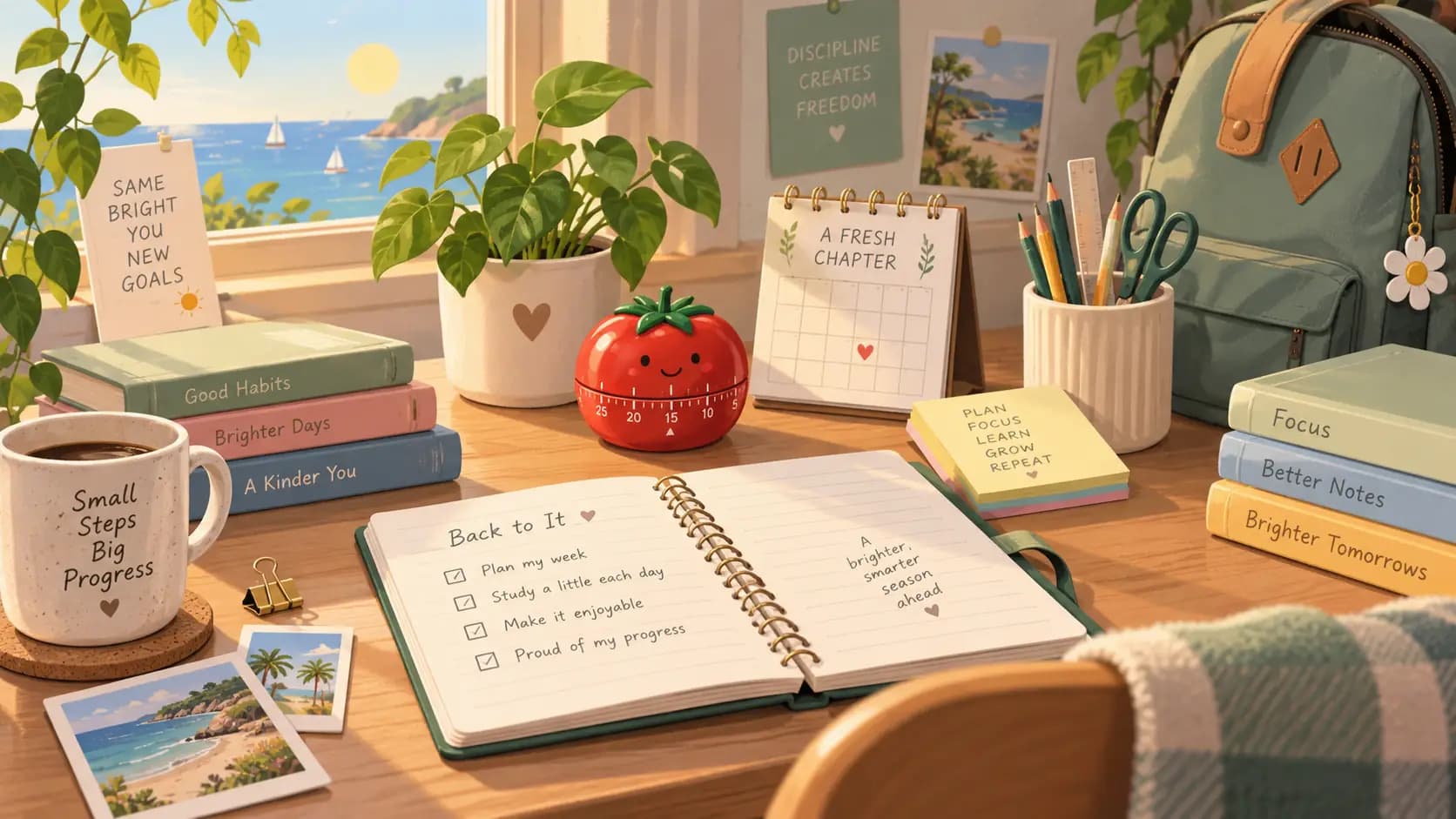
Keep this to a few seconds. You are leaving yourself a place to begin, not planning the rest of the week. Set your break timer before moving away so you do not have to keep checking the clock.
What to do during a five-minute study break
With five minutes available, choose one small activity. Trying to fit in a snack, a walk, several messages, and a tidy-up can leave you rushing back before you have had any rest.
If you have been sitting in the same position, stand up or change position in a way that is comfortable for you. At home, you could walk to the kitchen and refill your water. In a library, a brief trip to the water fountain might be enough. If leaving your seat is impractical, put down your materials and spend a few minutes looking away from your work.
You can also do very little. Sit quietly, listen to a song, or look out of the window. Cornell Health’s study break guidance includes movement, creative activities, and intentional downtime among its suggestions. A break does not need to produce anything you can measure.
Choose something with an obvious endpoint. Refilling a bottle finishes when the bottle is full. One song finishes when the track ends, provided you turn off autoplay. Browsing a feed leaves the stopping point up to you each time another post appears.
Use a longer break for something that needs more time
A ten- or fifteen-minute gap gives you room to step outside, prepare a simple snack, or have a brief conversation. Decide what reasonably fits before you begin. If making food usually takes twenty minutes, schedule enough time for it instead of squeezing it into a short pause and returning hungry or late.
Avoid turning a longer break into an expanding chore. Putting one mug in the sink is easy to finish. Starting to clean the kitchen may uncover several more jobs. The same applies to checking your inbox: a quick look can turn into replies, calendar changes, and an entirely different set of decisions.
These activities are not forbidden between study sessions. They just need enough space in your schedule. If you want to take a proper lunch break, call it lunch and allow for it. You do not have to force every part of the day into five-minute gaps.
Can you use your phone during study breaks?
Consider what happens when you pick it up. Answering one necessary message may fit your break without difficulty. If opening an app usually means staying until something interrupts you, it is a less convenient choice when you intend to return in five minutes.
Try deciding on the purpose before unlocking the screen: reply to your flatmate, check the bus time, or choose one song. Once that is done, put the phone down. If you repeatedly dismiss the break alarm, experiment with keeping your phone out of reach for the next couple of sessions and see whether returning becomes easier.
There is no need to describe every distraction as a dopamine problem. The practical question is whether the activity fits the break you planned. You can enjoy a video or catch up with friends later without having to fit either into the gap between two study blocks.
Adjust the break to your study space
In a quiet library, low-effort options are often the most convenient. Close your notebook, get some water, or step into a corridor where talking is allowed. Keep local rules and the security of your belongings in mind before leaving your seat.
At home, decide where you will spend the break before the timer rings. Otherwise, it is easy to drift from your desk to the sofa and into whatever happens to be on television. You might choose the kitchen for a drink or an open window for a change of view.
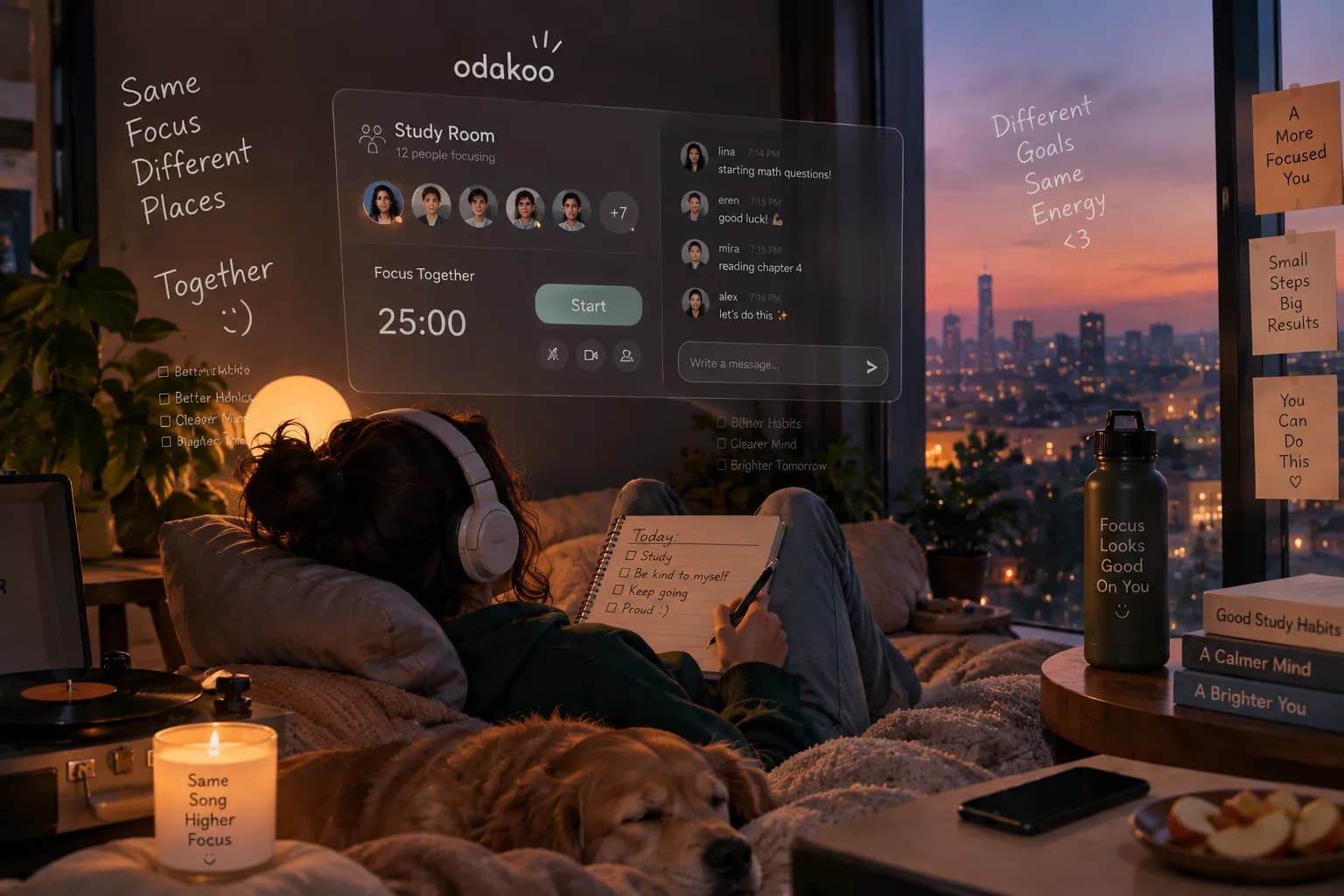
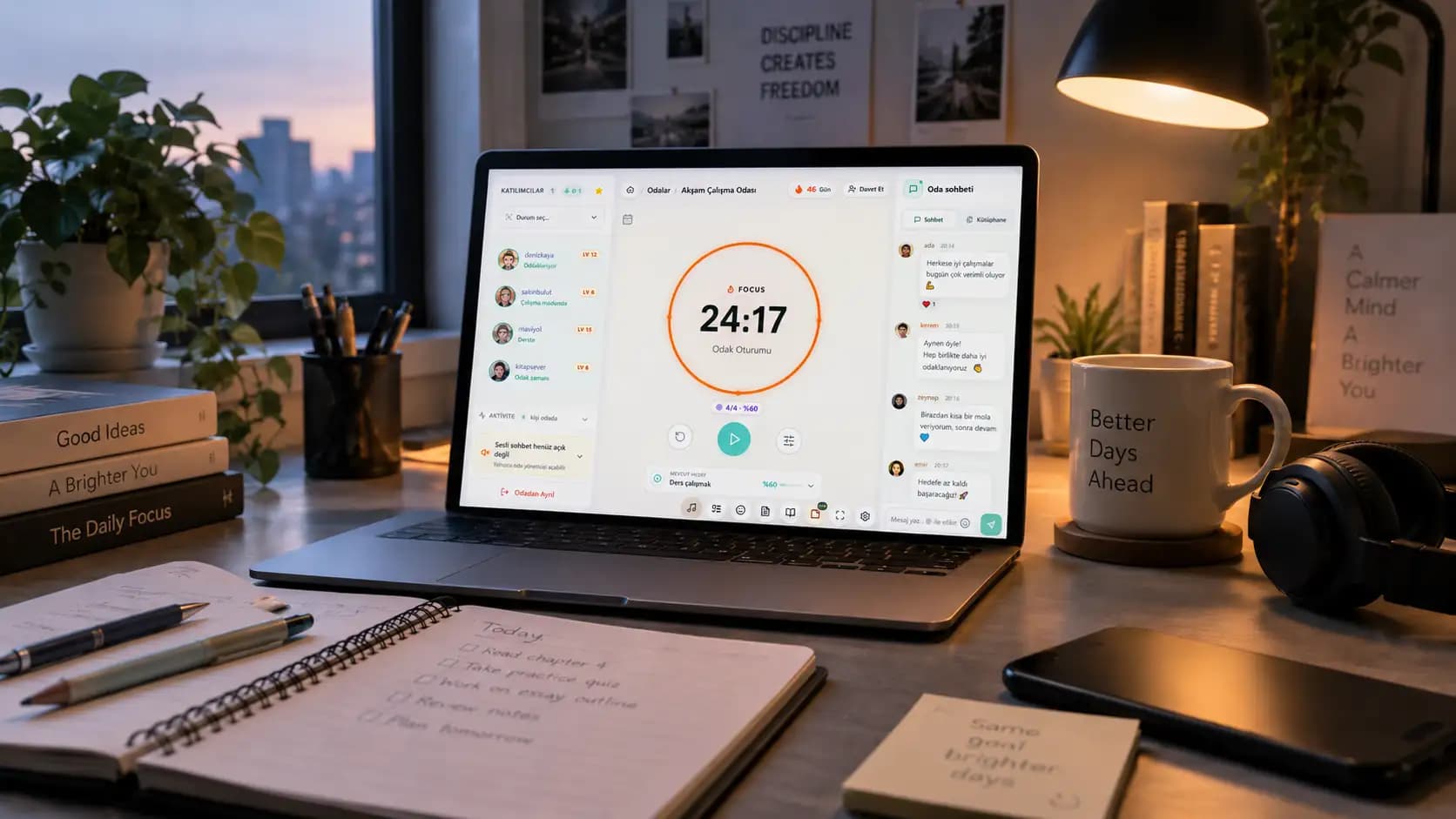
If you study with other people, agree on when everyone will return. A short conversation can be an enjoyable part of studying together, but nobody should have to guess whether the group is still on a break. With Odakoo, you can use the Pomodoro timer to keep track of your session and break periods while leaving yourself a clear next task.
Returning when the break is over
When the timer rings, read the note you left and take that first action. Open the relevant page, draw the diagram, or reread the paragraph you were editing. Avoid using the return as an opportunity to redesign your schedule or decide whether you feel motivated enough for the whole evening.
If you come back and still feel unable to concentrate, check what is actually getting in the way. You may need food, a longer rest, clarification of the assignment, or a different task. Repeating the same short break is not always the right response.
For your next session, try a modest experiment: leave a restart note, set the break timer, and choose one activity away from your study materials. When you return, notice whether you can get started without a long delay. Use that experience to decide what your next break should look like.